


Cradle Coast Residential Demand and Supply Study
The Cradle Coast Authority is comprised of 9 LGAs and drives sustainable regional developmentDate
September 16, 2024
Cradle Coast Residential Demand and Supply Study
Population & Housing Forecasts, Strategy & EngagementBackground
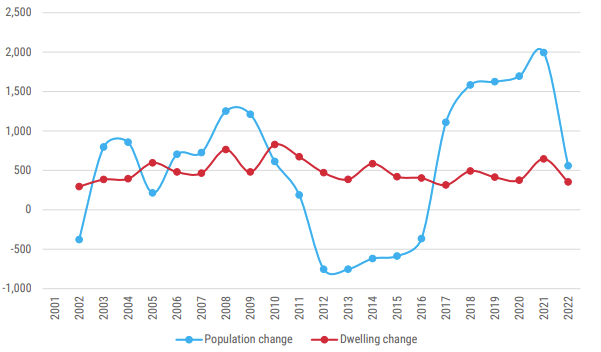
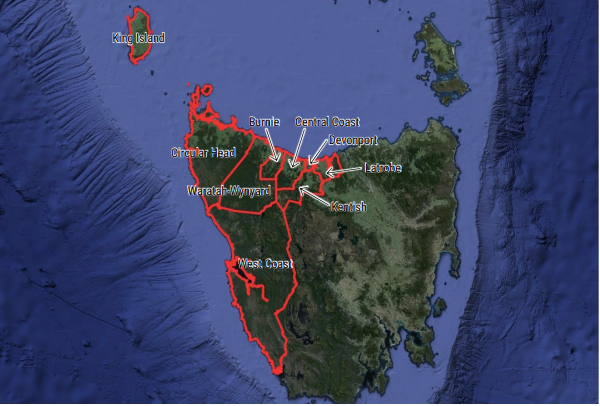
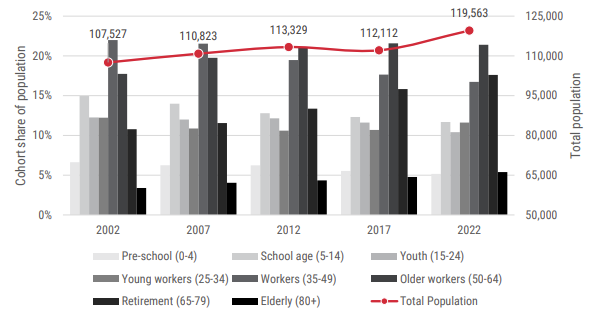
The Cradle Coast Authority encompasses 9 local government areas – Burnie, Central Coast, Circular Head, Devonport, Kentish, King Island, Latrobe, Waratah-Wynyard, and West Coast. The Cradle Coast region has sustained annualised population growth of 1.3% over the last five years (to 2022) and had a combine estimated resident population of 119,673 in 2022.
Since 2011, the Cradle Coast Regional Land Use Strategy (CCRLUS) 2010-2030 has been the guiding policy facilitating and managing growth, change and development. Whilst this project is not intended to deliver a new settlement strategy, the Cradle Coast Residential Demand and Supply Study (CCRDSS) provides a key input and evidence-base for the review of the CCRLUS.
Project Goals
This Residential Demand and Supply Study is the final report for the CCRDSS project. The objective of this report is to establish a baseline for housing across the region and density aspects relevant to housing supply and demand, including factors such as trends in housing supply, supply factors, current and future land supply, population and household forecast, and the impact of forecast demand on estimated supply. This report also aims to provide an evidence base that will identify key issues pertinent to residential supply and demand as well as establishing the level of variation and differentiation that exists across the region.
REMPLAN’s Involvement
REMPLAN supports the Cradle Coast Authority by undertaking this report to gain a greater understanding of the factors driving demand across the region’s unique localities, as well as establishing a baseline of land supply across the region. REMPLAN will use our inhouse software system to perform the residential demand and supply study.
Results
The dwelling demand and supply of residential land varies across the LGAs. Analysis prepared as part of this project indicates that at an LGA level most municipalities have enough residentially zoned land to meet forecast demand out beyond 2046. Only Devonport and Latrobe exhaust theoretical supply within the forecast period and Kentish also exhausts supply if only vacant land is considered. The primary factor affecting all regions is the ageing population. Regular engagement with stakeholders and regular monitoring of supply and demand factors are crucial for aligning housing provision with evolving community needs, ensuring that infrastructure and policy development can promptly respond to demographic and economic changes.
Related Projects
New South Wales and Victoria Opal Packaging Operations Economic Impact Assessment
Energy & Resources, Strategy & Engagement
Mackay Region: Economic Profile 2025
Strategy & Engagement
Mildura Residential Land Supply
Strategy & EngagementClose