


Beyond the Farm Gate: Water Availability and Impact on the Rise Economy and Regional Supply Chains Economic Impact Analysis
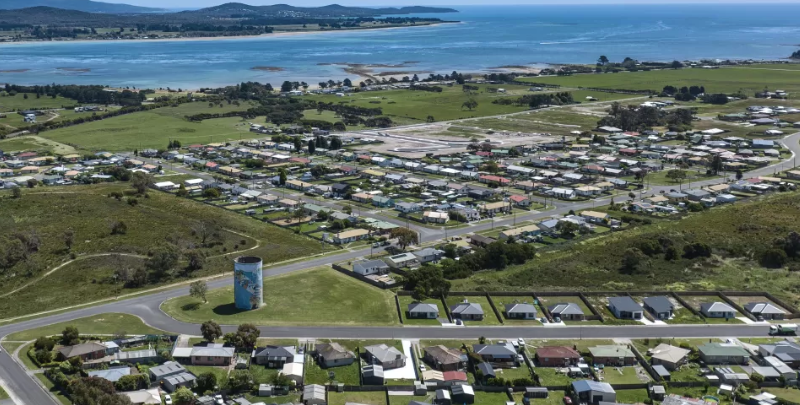
The Riverina region is a diverse area known for its agricultural productivity and rich cultural heritage.Date
May 12, 2026
Beyond the Farm Gate: Water Availability and Impact on the Rise Economy and Regional Supply Chains Economic Impact Analysis
Energy & Resources, Strategy & EngagementBackground
The Riverina region is one Australia’s most significant irrigation-dependent economies, with communities such as Leeton and Deniliquin supporting extensive agricultural production, food processing, manufacturing, logistics, and export supply chains. As Sustainable Diversion Limits (SDLs) and changing water market conditions continue to affect the availability, reliability, and cost of irrigation water, there is increasing concern about the broader economic implications for regional industries, employment, and community sustainability. Understanding this impact is critical to informing future water policy and regional planning decisions.
Project Goals
The project aimed to quantify the wider economic impacts of reduced irrigation water availability by examining how changes in water access and pricing influence agricultural production, downstream processing industries, supply chains, and overall regional economic performance. The project sought to identify which industries and communities are most exposed to water-related changes, assess the scale of potential economic impacts, and provide evidence to support policy discussions around the future management of water resources in the Murray-Darling Basin.
REMPLAN’s Involvement
REMPLAN was commissioned by the Riverina and Murray Joint Organisation to undertake a scenario-based economic impact assessment of SDL-related water reduction across Leeton and Deniliquin. Using REMPLAN regional economic models and industry-specific analysis, REMPLAN examined the relationship between water availability, agricultural production, processing activity, and regional economic outcomes. The assessment quantified potential impacts of output, gross regional product, employment, and supply chain activity under a range of future water availability scenarios, providing a robust evidence base for policy advocacy and decision-making.
Results
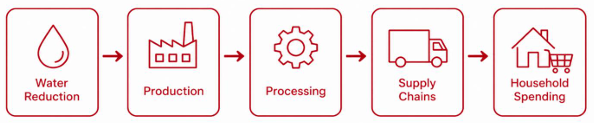
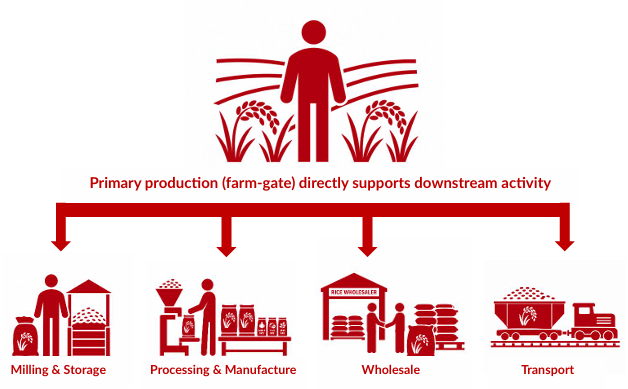
The analysis found that reductions in irrigation water availability have consequences that extend well beyond the farm gate, affecting processing industries, supply chains, local businesses, and employment throughout the regional economy. The findings showed that Leeton and Deniliquin are particularly exposed due to their high reliance on irrigated agriculture and rice-related industries, with economic impacts increasing significantly as water constraints intensify and key industry viability thresholds are reached.
Related Projects

Dubbo Region Economic Gaps and Opportunities Report
Strategy & Engagement
Casey Fields Economic and Social Impact Assessment
Sport & Recreation, Strategy & Engagement, Urban Planning & Precincts
City of Greater Bendigo International Engagement Strategy
Strategy & Engagement, Tourism & CultureClose