




14 Jul Productivity – The shift to non-market activities
Have non-market activities increased in your local economy?

National Context
Labour productivity growth in Australia has been subdued according to recent Australian Bureau of Statistics national accounts and labour market estimates. This is of concern as productivity growth is the most important determinant of long-run economic growth and living standards.
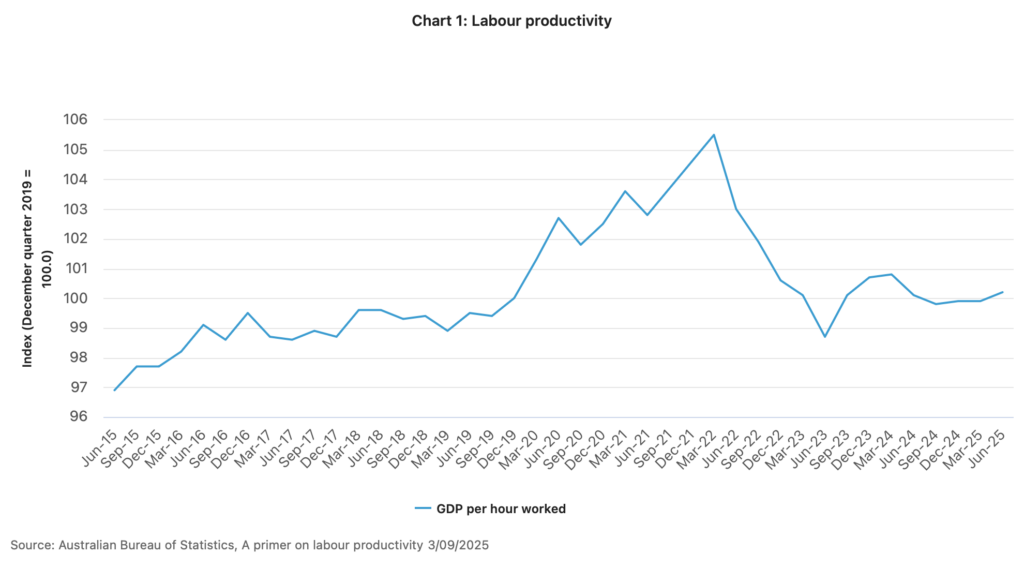
Productivity is often misunderstood. It is not necessarily about people working harder. Rather, it measures how much value is produced for each hour worked. Productivity improves when workers can produce more because of improved:
- Technology
- Skills and education
- Management
- Systems and infrastructure
- Capital, R&D investment and innovation
- Policies and regulation.
The ABS notes that Australia’s long-run average annual labour productivity growth has fallen from about 1.8% in the early 2000s to around 0.8% today.
Why has productivity weakened?
Australian businesses have invested less in machinery, software, automation and other productive capital than in previous decades. While the nation performs reasonably well in research, it commercialises innovation less effectively than many comparable countries. Shortages of skilled labour are a factor, and a related constraint is the lack of affordable housing in many parts of the country.
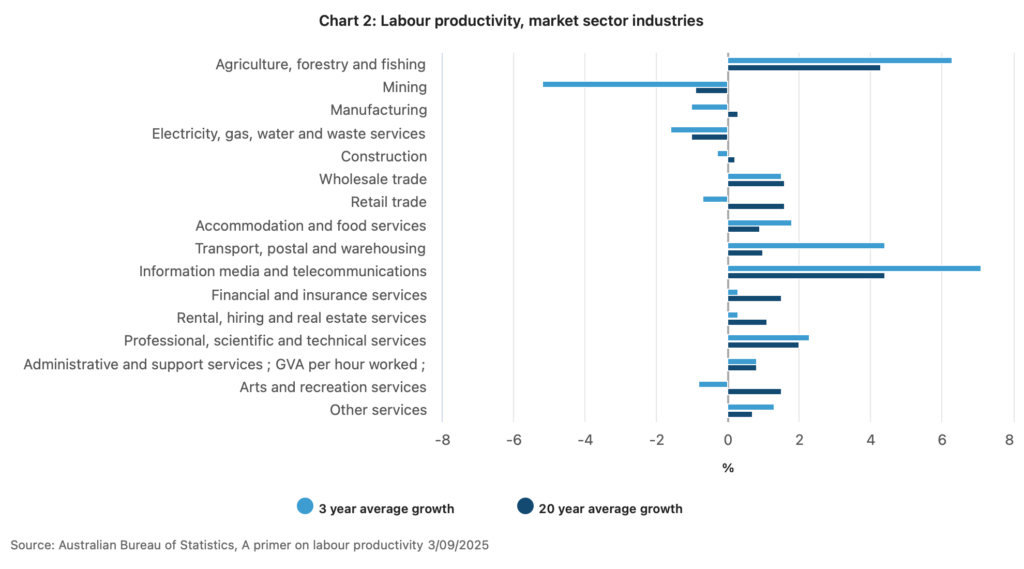
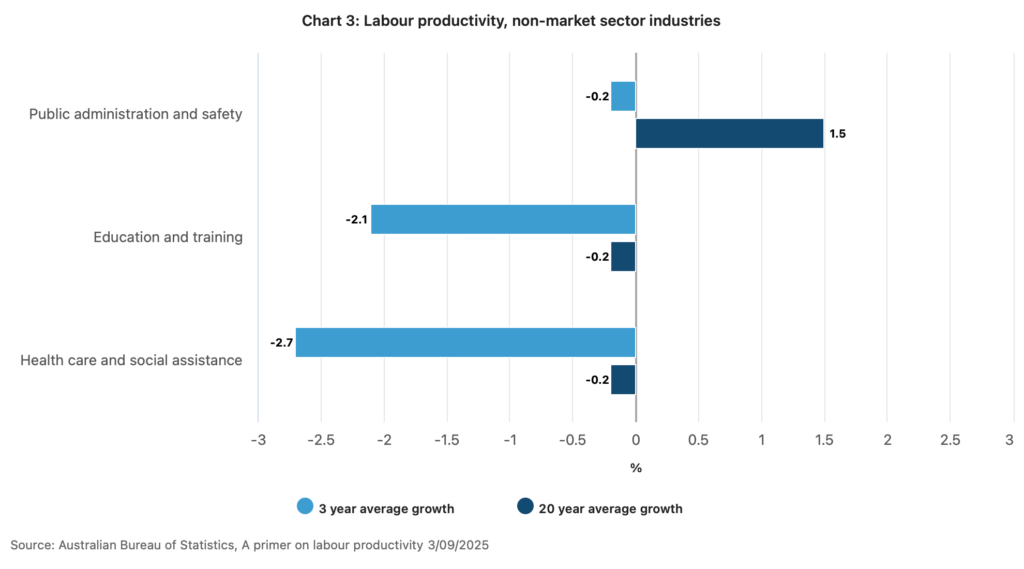
Another important element that is often overlooked is the structural shift from ABS-defined ‘market’ sectors, to ‘non-market’ activities such as:
- Public administration and safety
- Education and training
- Health care and social assistance.
In the state of Victoria for example, from 2016 manufacturing employment decresed from 8.2% of total employment to 6.8%. While over the same period to 2025, jobs in Health Care and Social Assistance increased from 13.1% to 16.2%. We can observe this structural shift in many regions and local government areas across Australia. According to the ABS, these non-market activities have performed poorly over recent years from a productivity standpoint.
Local Insights
REMPLAN monitors the economic performance of all Australian states, regions and local government areas. A key elements of this is labour productivity, in terms of value-added, output, and wages per worker, by industry sector.
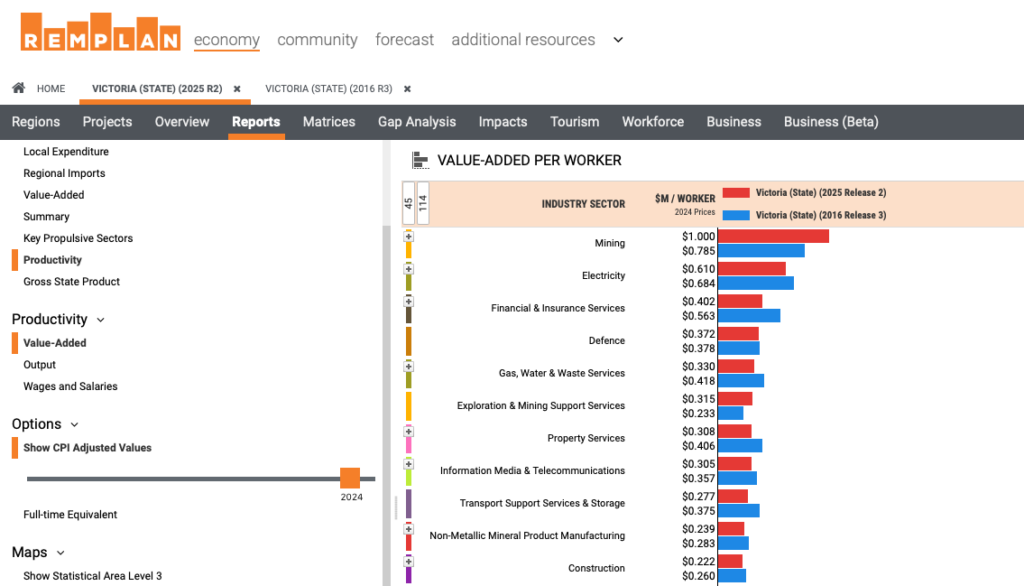
Can you observe the same shift to non-market activities in your local economy?

No Comments